Your cart is currently empty
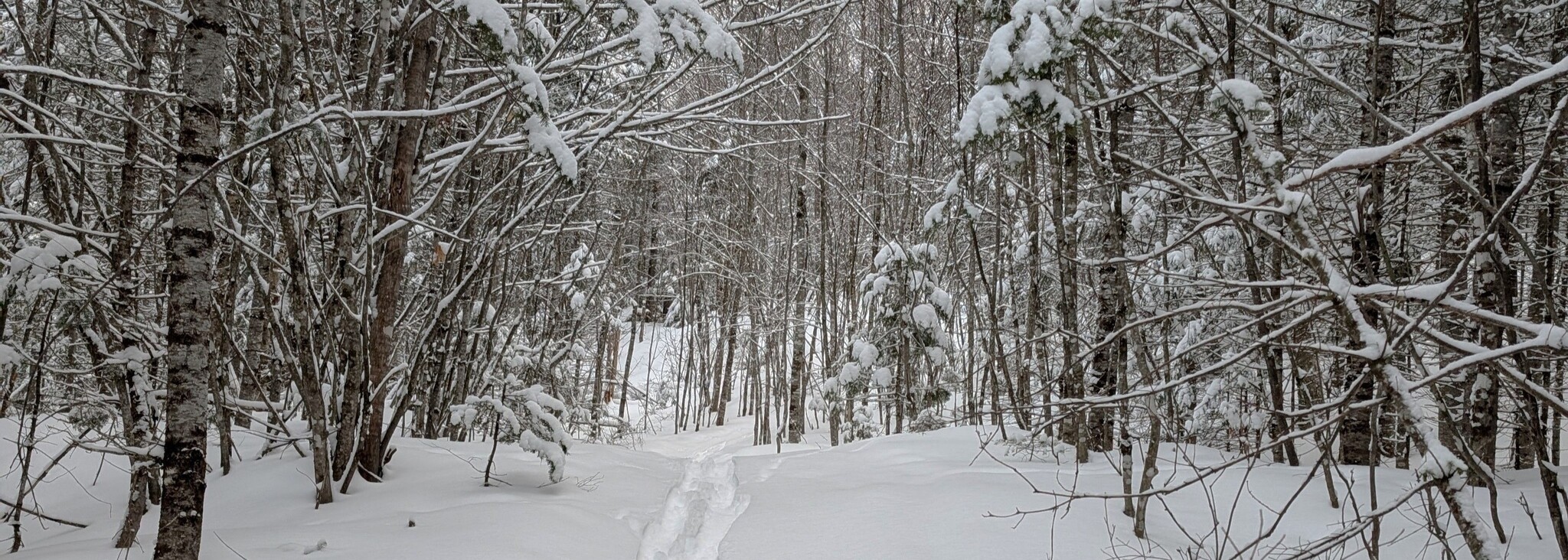
Big Rock Mountain has a dedicated and varied group of users and welcomes and supports all guests seeking to enjoy the mountain. At Big Rock Mountain, safety is always our priority, and we ask that all users follow these policies and acknowledge that all activities are at the individual’s own risk. Failure to adhere to any of the policies could result in the loss of the privilege of uphilling for all. Uphill travelers can help preserve access by respecting and following the following guidelines.
|
RISK:
Uphill travel during and outside normal operating hours is done solely at the individual's own risk. Any workers encountered outside normal operating hours are not ski patrol. No rescue services are available outside normal operating hours.
|
|
SAFETY: Big Rock Mountain has a large amount of terrain designated as backcountry, or side-country. None of this terrain is deemed open or closed, nor is it swept by Ski Patrol. There are known and unknown hazards that are not marked. Use your own judgment on what is safe. An abundance of caution is encouraged. |
|
EMERGENCIES: During operating hours, contact Ski Patrol (207-425-6711). During all other times, call 911. |
|
TICKETING: Individuals must purchase an uphill ticket, an uphill season pass, an alpine ticket, a regular alpine season pass, or a snowshoe ticket to access Big Rock Mountain property. Any of the aforementioned passes may be purchased at the Ticket Office. |
|
ACCESS: Uphill travel is allowed during and outside normal operating hours. Big Rock Mountain Management reserves the right to cancel or modify uphill access at any time for any reason. |
|
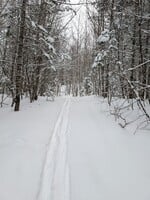
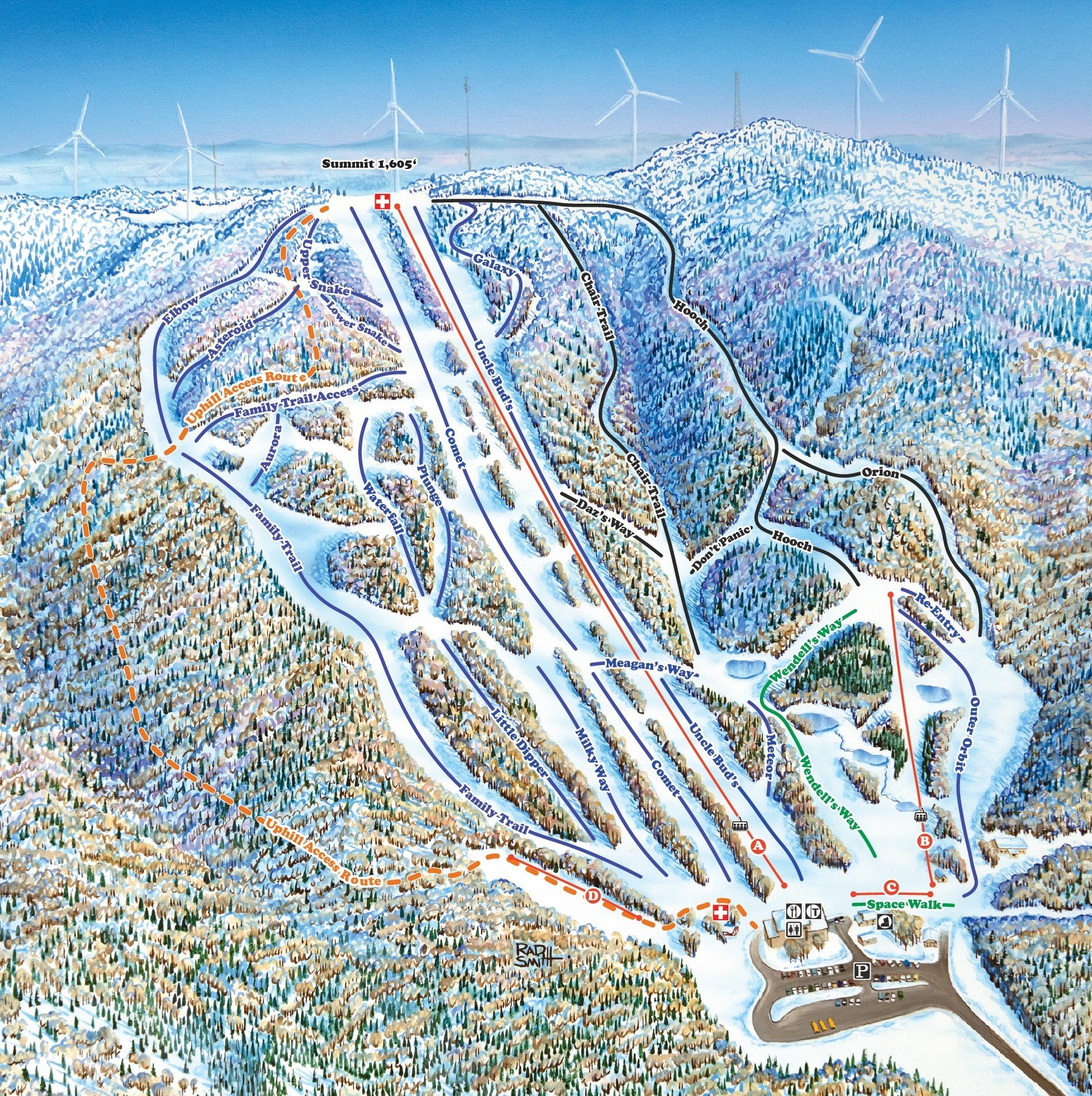
TRAILS: Unless otherwise stated, all uphill access from the base of the ski area is via the Tucker’s Tunnel and Woodpecker’s Way trails – collectively comprising the Uphill Trail. The Uphill Trail is considered backcountry and is never swept by Ski Patrol. |
|
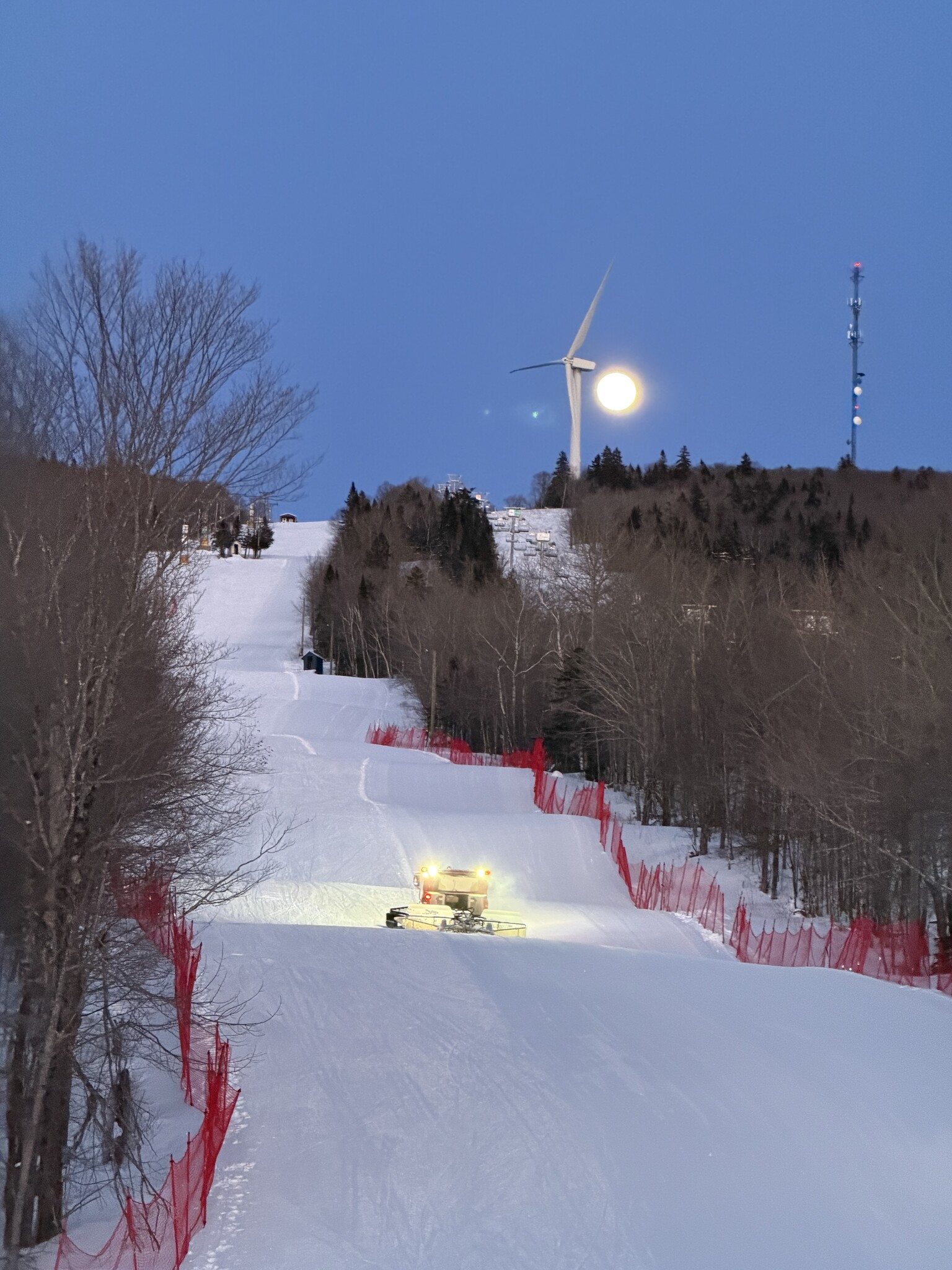
MOUNTAIN OPERATIONS: Watch out for and avoid all snowmaking equipment, snowmobiles, groomers, utility vehicles, and any other hazards, vehicles, and workers. Do not ski over snowmaking hoses or cables. If a groomer or snowmobile is present, uphill traffic must stop and step off the trail until the groomer passes. Downhill traffic should stay far away from any groomers or snowmobiles. It is the skier’s responsibility to avoid, give the right of way, and yield to all mountain operations. |
|
CONDUCT: All skiers and snowboarders must always abide by the skier’s responsibility code within Big Rock Mountain property. |
|
OTHER: Sleds, tubes, saucers, snowmobiles, fat bikes, or any other devices are not allowed anywhere on Big Rock Mountain property, unless otherwise authorized. Overnight stays on Big Rock Mountain property are not permitted. Only service animals are allowed on Big Rock Mountain property. |
Please read the following Maine Statute that applies to skiing and riding, as well as Big Rock Mountain Uphill Policy:
Under Maine Law, a skier assumes the risk of any injury to person or property resulting from any of the inherent dangers and risks of skiing and may not recover from any ski area operator for any injury resulting from any of the inherent dangers and risks of skiing, including, but no limited to: existing and changing weather conditions; existing and changing snow conditions, such as ice, hardpack, powder, packed powder, corn, crust and slush and cut-up, granular and machine-made snow; surface or subsurface conditions, such as dirt, grass, bare spots, rocks, stumps, trees, forest growth or other natural objects and collisions with such natural objects; lift towers, lights, signs, posts, fences, mazes or enclosures, hydrants, water or air pipes, snowmaking and snow-grooming equipment, marked or lit trail maintenance vehicles and snowmobiles, and other man-made structures or objects; variations in steepness or terrain, whether natural or as a result of slope design, snowmaking or grooming operations, including, but not limited to, freestyle terrain, jumps, roads and catwalks or other terrain modifications; the presence of and collisions with other skiers; and the failure of skiers to ski safely, in control or within their own abilities.